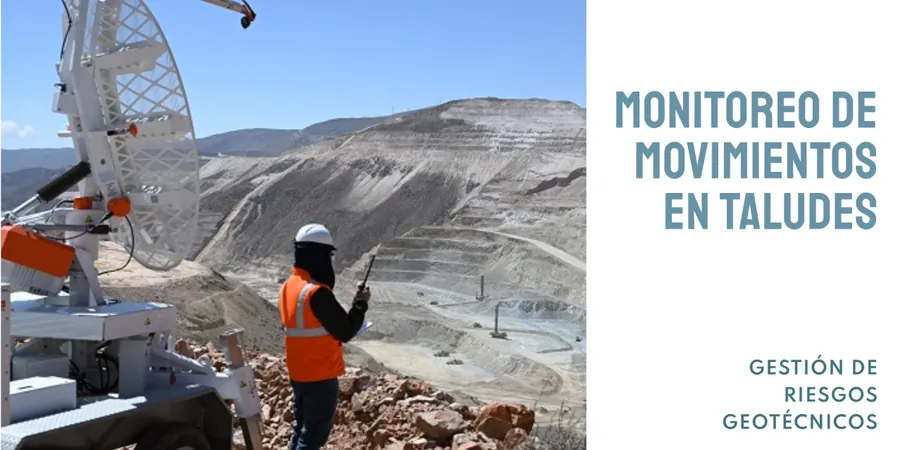
Fremont sits at the foot of the Diablo Range, where hillsides rise sharply from the bay plain. Elevations jump from near sea level to over 400 feet in less than two miles. That relief, combined with clay-rich soils from the Great Valley sequence, creates chronic slope creep. Our monthly monitoring service tracks millimeter-scale displacements using survey prisms and inclinometers. Readings are taken at consistent benchmarks, rain or shine. We correlate movement with rainfall data from the nearby Mission San Jose weather station. Before deploying instruments, we review existing borehole logs and classify soils per ASTM D2487. For deeper insight into subsurface layering, we often combine this service with a georradar-gpr survey to map hidden shear zones. The data feeds directly into a trend analysis report updated every 30 days.
Movement exceeding 0.5 inches per month triggers an immediate review, often preventing catastrophic slope failure before it reaches adjacent structures.
Methodology and scope
A common mistake local contractors make is installing slope monitoring points without a baseline survey. Without knowing the initial condition, millimeter changes become meaningless. Our protocol starts with a topographic survey tied to a fixed datum. We then install inclinometer casings at least 15 feet below the estimated slip plane. Readings are taken at 2-foot intervals with a biaxial probe. Surface prisms are read with a total station accurate to 1 arc-second. All data is corrected for temperature and barometric pressure. We also document surface cracks with a crack gauge calibrated to 0.01 inches. If movement exceeds 0.5 inches per month, we flag the site for immediate review. For projects near residential lots, we recommend pairing this service with an anclajes system design to prevent progressive failure into occupied structures. Each monthly report includes a movement vector map, piezometer readings, and a risk score.
Technical reference image — Fremont
Local considerations
ASCE 7-16 Section 11.8.2 requires that slope stability be verified for any structure within 50 feet of a descending slope. In Fremont, where the Hayward Fault runs east of I-680, seismic loading amplifies existing creep. A slope that moves 0.2 inches per year under static load can jump to 2 inches during a magnitude 6.5 event. Monthly monitoring catches pre-seismic acceleration. Without it, the first sign of failure is often a cracked foundation or a tilted retaining wall. That is too late. We follow FHWA-NHI-05-037 for instrumentation protocols and calibrate all sensors against NIST-traceable standards.
Monthly walkover inspection of the slope face, crack width measurement with digital calipers, and six survey prism readings. Includes a one-page summary report with photographs and displacement vectors.
02
Inclinometer + Piezometer Package
Biaxial inclinometer readings at 2-foot intervals from two casings, plus four vibrating-wire piezometers. Report includes depth-to-slip-plane calculation and pore pressure trends plotted against rainfall.
03
Full Instrumented Array
Up to six inclinometer casings, ten piezometers, tiltmeters on adjacent structures, and a weather station. Monthly reporting includes 3D movement models, risk rating updates, and recommended trigger action levels.
Applicable standards
ASCE 7-16 Section 11.8.2 (slope proximity requirements), FHWA-NHI-05-037 (instrumentation and monitoring), ASTM D2487 (soil classification for slope materials)
Frequently asked questions
How much does monthly geotechnical slope monitoring cost in Fremont?
For a typical hillside lot in Fremont, monthly monitoring ranges between US$390 and US$1,240 depending on the instrument count and report detail. Basic visual plus prism monitoring falls at the lower end, while a full array with inclinometers and piezometers sits near the upper bound. Prices vary with slope access and sensor density.
How long does it take to detect movement with monthly monitoring?
Most creep rates in Fremont's clay-rich hillsides are between 0.05 and 0.2 inches per year. At that rate, three consecutive monthly readings are usually sufficient to establish a trend above measurement noise. If movement accelerates beyond 0.5 inches in one month, we flag the site immediately.
Do I need a permit to install monitoring instruments on my Fremont property?
Inclinometer casings and piezometers are typically classified as geotechnical investigations and do not require a building permit in Fremont. However, if the casing protrudes above grade more than 12 inches, you may need an encroachment permit from the City of Fremont Public Works. We handle that paperwork as part of the service.
What happens if monitoring shows accelerating movement?
We issue an interim alert within 48 hours. The report includes the measured rate, a comparison to the previous two months, and a preliminary risk rating. We recommend immediate consultation with a geotechnical engineer to evaluate whether temporary shoring, drainage improvements, or slope regrading is needed. The data supports emergency response decisions.