← Home · Laboratory

Laboratory CBR Test for Pavement Design in Fremont

Together, we solve the challenges of tomorrow.

LEARN MORE →

Fremont sits on alluvial fan deposits from the Diablo Range and bay muds along the southern edge of San Francisco Bay, conditions that produce highly variable subgrade strengths across the city. We run California Bearing Ratio tests on undisturbed and recompacted samples to establish the design CBR value for flexible pavements. For projects near the Niles Cone groundwater basin, we combine the laboratory CBR test with a granulometría analysis to understand the influence of fines content on soaked CBR, and we cross-check results against field density data from a masw-vs30 survey when the pavement lies on deep soft soils.
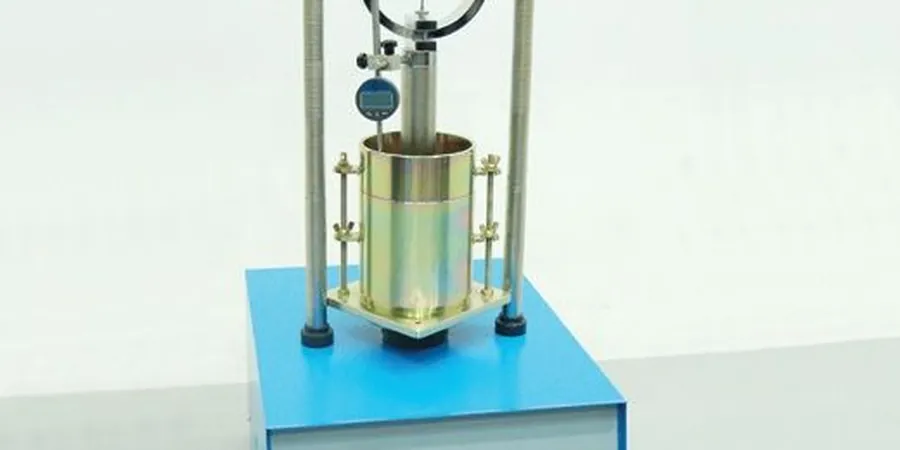
Illustrative image of Ensayo cbr in Fremont
A soaked CBR below 3 on bay mud indicates the subgrade cannot support a pavement without chemical stabilization or a geogrid-reinforced granular base.

Methodology and scope

Fremont grew rapidly from the 1950s onward, converting orchards and salt flats into residential subdivisions and industrial parks along I-880 and I-680. Much of the original grading left heterogeneous fills up to 4 m thick, especially in the Warm Springs district. We follow ASTM D1883-16 for the laboratory CBR test, using a 4.54 kg hammer and 457 mm drop to compact samples in three layers at a range of moisture contents. The soaked CBR after 96 hours of immersion represents the worst-case subgrade condition under a saturated pavement. We also run swell measurements to flag expansive clays before specifying base thickness. For critical sections we complement the CBR with a clasificación-suelos by the Unified Soil Classification System to correlate CBR with soil type.
Technical reference image — Fremont

Local considerations

Fremont receives about 380 mm of rain annually, concentrated from November to April, and the shallow groundwater table in the central basin rises within 1.5 m of the surface during wet months. A laboratory CBR test run on dried samples during summer will overestimate the true soaked CBR, leading to a pavement section that fails after the first rainy season. We always run the soaked CBR at the project moisture content and compact the specimen at the field dry density expected after construction. Ignoring the swell component in expansive clays of the Mission Series can crack the asphalt within two years.

Need a geotechnical assessment?

Reply within 24h.

Email: contact@geotechnicalengineering1.biz

Technical parameters

ParameterTypical value
Compaction effortStandard Proctor (ASTM D698) or Modified (D1557)
Soaking period96 hours with 25 mm surcharge load
Penetration rate1.27 mm/min
CBR range reportedUnsoaked and soaked at 2.54 and 5.08 mm penetration
Swell measurementRecorded after 96 h; reported as % of initial height
Sample dimensions152.4 mm diameter x 116.4 mm height (mold size)

Associated technical services

01

Field CBR with Dynamic Cone Penetrometer

In-situ DCP testing to obtain a continuous CBR profile along the subgrade, correlated with laboratory results for QA/QC on compacted fill layers.

02

Resilient Modulus (Mr) Testing

Repeated-load triaxial test per AASHTO T 307 to measure Mr for mechanistic-empirical pavement design (MEPDG). We correlate Mr with CBR for local materials.

03

Expansive Soil Assessment

Free-swell test and swell pressure measurement on samples from the same boring. Essential when the laboratory CBR test shows swell greater than 2% after soaking.

Applicable standards

ASTM D1883-16 — Standard Test Method for CBR of Laboratory-Compacted Soils, AASHTO T 193-99 — The California Bearing Ratio, Caltrans HDM — Highway Design Manual Chapter 630 (Pavement Structure)

Frequently asked questions

How much does a laboratory CBR test cost in Fremont?

The typical cost ranges between US$140 and US$200 per sample, including compaction, soaking, penetration, and swell measurement. Rush testing or multiple moisture-density points may increase the price.

What minimum CBR value does Caltrans require for a pavement subgrade?

Caltrans typically expects a soaked CBR of at least 5 for a subgrade to support a standard flexible pavement without treatment. Values between 3 and 5 warrant a thicker aggregate base or chemical stabilization. Our laboratory CBR test report includes a recommendation based on the specific traffic index of the project.

Can I use a CBR from a different site for my Fremont project?

No. Subgrade soils in Fremont vary from stiff gravelly sands near the hills to soft bay muds in the western flats. A laboratory CBR test must be run on samples taken from the actual boring location at the proposed subgrade elevation. Using generic values from adjacent parcels has caused pavement failures in industrial lots along Kato Road.

Location and service area

We serve projects across Fremont.

Location and service area