← Home · Investigation

SPT (Standard Penetration Test) in Fremont

Together, we solve the challenges of tomorrow.

LEARN MORE →

We recently supervised a six-story apartment project near Fremont's Lake Elizabeth. The geotechnical consultant needed reliable N-values to design shallow foundations on the alluvial deposits common in this area. That's where the SPT (Standard Penetration Test) became essential. In our experience, this test delivers the most cost-effective profile of soil resistance and stratigraphy for sites along the Mission Peak foothills. We pair it with a granulometry analysis when the sand-silt ratio affects bearing capacity. Every blow count is recorded per ASTM D1586-18 standards, giving engineers a direct read on density and consistency.
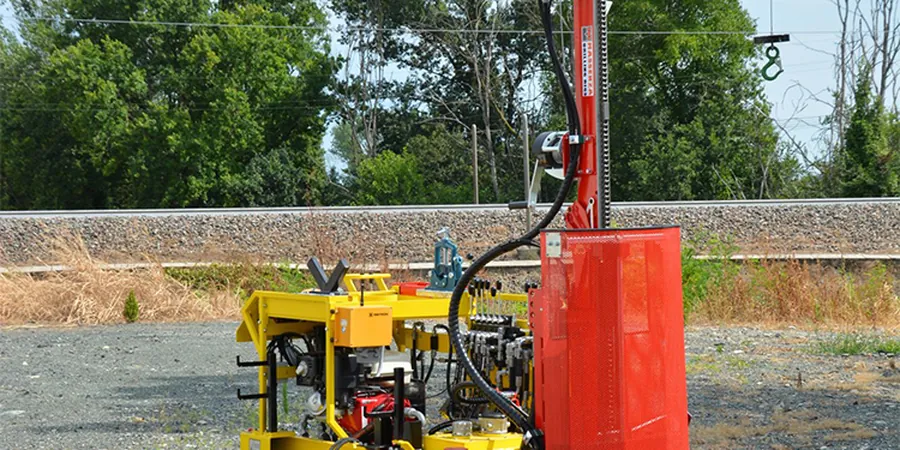
Illustrative image of Ensayo spt in Fremont
Blow counts in Fremont often range from 8 to 35 in native alluvium, but loose fills can drop to 4 blows per foot.

Methodology and scope

Fremont sits on a mix of Quaternary alluvium and older Bay Mud deposits. The water table here can sit as shallow as 6 feet after wet winters. That changes everything. For the SPT (Standard Penetration Test), we use a 140-pound hammer dropped 30 inches per blow, following ASTM D1586-18 to the letter. We stop the test if refusal is reached at 50 blows for 6 inches. This protocol matches what the California Building Code expects for seismic site class determination.
Technical reference image — Fremont

Local considerations

Fremont grew fast after the 1960s. Subdivisions replaced orchards on the valley floor and hillsides. Many of those early developments had minimal geotechnical investigation. Today we see the consequences: differential settlement in homes built on undocumented fill, and liquefaction concerns in the zones near Coyote Creek and the Bay. A proper SPT (Standard Penetration Test) identifies loose layers before construction starts. We have mapped several neighborhoods where N-values below 10 indicate liquefiable sands at depths of 10 to 20 feet. The 1989 Loma Prieta earthquake reminded everyone that the Bay Area's soft soils amplify shaking. Our team flags these risks in every report.

Need a geotechnical assessment?

Reply within 24h.

Email: contact@geotechnicalengineering1.biz

Technical parameters

ParameterTypical value
Hammer weight140 lb (63.5 kg)
Drop height30 in (76 cm)
Sampler OD2.0 in (50.8 mm)
Sampler ID1.375 in (34.9 mm)
Blow count recordingEvery 6 in (3 increments)
Standard penetration resistance NBlows for last 12 in

Associated technical services

01

SPT with Continuous Sampling

Split-spoon samples recovered every 5 feet or at change of stratum. N-values logged in real time. Samples bagged for moisture content and visual classification.

02

SPT with Seismic Cone (SCPTu)

Combined SPT and CPTu for projects requiring both N-values and shear wave velocity data. Ideal for seismic site response analysis in Fremont's Bay Mud zones.

03

SPT for Liquefaction Evaluation

Specifically targeting loose sands with N1(60) values below 15. We follow the Youd & Idriss (2001) methodology to calculate cyclic resistance ratio.

Applicable standards

ASTM D1586-18, ASTM D2487 (soil classification), IBC 2021 (Chapter 18), ASCE 7-22 (Seismic Site Class)

Frequently asked questions

How deep can the SPT (Standard Penetration Test) reach in Fremont soils?

We typically drill to 60 feet using hollow-stem augers. In areas with dense gravel layers near Mission Peak, we may stop earlier at refusal. The test depth depends on project loads and the presence of Bay Mud or stiff clay.

What is the cost range for an SPT (Standard Penetration Test) in Fremont?

For a standard borehole with SPT sampling every 5 feet to 40 feet depth, you can expect between US$630 and US$780. This includes mobilization within Fremont, field testing, sample logging, and a summary report. Larger projects get volume discounts.

How do SPT results affect foundation design in Fremont's seismic zones?

N-values directly determine the soil's seismic site class per ASCE 7. Site Class D (stiff soil) is common in central Fremont. If N-values average below 15, the building code may require a site-specific response analysis. We flag these cases early.

Location and service area

We serve projects across Fremont.

Location and service area