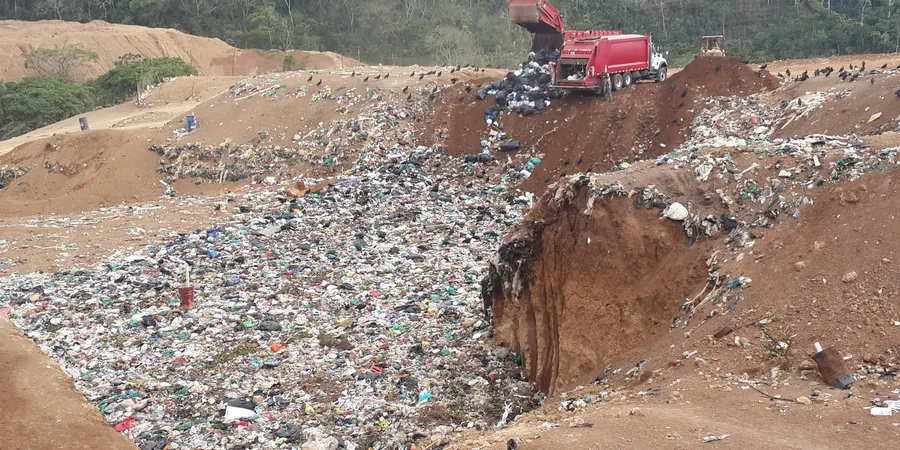
Fremont sits on a mix of alluvial fan deposits and bay muds, which makes landfill geotechnics a careful balancing act between compressibility and containment. The City of Fremont follows IBC 2021 and ASCE 7-22 for seismic design, but for landfill liners and leachate systems we lean heavily on ASTM D1586 for SPT blow counts and ASTM D2487 for soil classification. In our experience, the old landfill sites near the Don Edwards Refuge require particular attention to differential settlement because the underlying bay mud can vary in thickness by 15 feet within a single cell. We start each project by correlating blow counts with moisture content, and often run a permeability test in the field directly on the compacted clay liner to confirm hydraulic conductivity stays below 1x10⁻⁷ cm/s.
In Fremont, the bay mud compressibility can consume half the allowable settlement budget if not characterized with oedometer tests on undisturbed samples.
Methodology and scope
The shallow groundwater table in Fremont, typically 8 to 12 feet below grade, forces us to design leachate collection systems that can handle seasonal recharge from winter storms. We measure compaction using the standard Proctor (ASTM D698) and then verify density with nuclear gauges on every 12-inch lift. For the final cover system, we look at long-term erosion resistance, which is why we often use a 24-inch protective soil layer topped with native grasses. A typical project includes:
SPT borings to refusal depth to map the stiff clay layer below the bay mud
Oedometer tests on undisturbed samples to quantify secondary compression
Triaxial CU tests for undrained shear strength of the liner soil
Chemical compatibility testing if the waste stream contains solvents
We also check the gas venting layer permeability with a constant-head test before placing the geomembrane.
Technical reference image — Fremont
Local considerations
A few years back we worked on a landfill expansion in the Warm Springs district where the operator had already placed 8 feet of waste before we ran the first settlement analysis. The bay mud underneath was 40 feet thick, and our consolidation tests showed that the primary compression would take 6 years, not the 18 months they had budgeted. That kind of underestimation can crack the leachate pipes and rupture the geomembrane liner, leading to groundwater contamination fines that run into the millions. We now insist on running a plate load test on the prepared subgrade before any liner placement, especially where the foundation soil has a plasticity index above 30.
Compaction testing and permeability checks on clay liners and geosynthetic clay liners (GCLs). We run field density tests every 2,500 square feet.
02
Leachate Collection System Analysis
Gradation tests on drainage aggregate, pipe slope verification, and long-term clogging potential using site-specific leachate chemistry.
03
Slope Stability for Final Cover
Limit equilibrium analysis using Bishop's method for 2:1 and 3:1 side slopes. We include seismic loading per ASCE 7-22 peak ground acceleration maps.
04
Gas Venting Layer Performance
Constant-head permeability tests on sand or gravel layers, plus gas pressure monitoring during the first year of operation.
Applicable standards
ASTM D1586-18 Standard Test Method for SPT, ASTM D698-12 Standard Test Methods for Laboratory Compaction (Standard Proctor), IBC 2021 Section 1807.2 Footing and Foundation Walls, ASTM D5084-16a Standard Test Methods for Hydraulic Conductivity of Saturated Porous Materials
Frequently asked questions
What specific tests are required for a landfill liner in Fremont?
At minimum you need compaction tests (ASTM D698), hydraulic conductivity tests (ASTM D5084), and Atterberg limits (ASTM D4318) on the liner soil. For the subgrade, we also run SPT borings to refusal depth to map the stiff clay layer.
How deep do you drill for landfill geotechnics in Fremont?
We drill to at least 10 feet below the planned liner base or into the stiff clay layer, whichever is deeper. In the bay mud areas near the Don Edwards Refuge, borings often go 40 to 50 feet deep to reach competent material.
What is the typical cost range for a landfill geotechnical study in Fremont?
A full study including 4 to 6 borings, lab testing, and a design report runs between US$2.250 and US$9.200 depending on the depth and number of tests. The range can shift up if chemical compatibility testing is needed.
How long does the settlement analysis take for a Fremont landfill?
Primary compression from bay mud can take 2 to 6 years based on our oedometer tests. We provide a settlement vs. time curve so you can plan waste placement in stages and avoid differential damage to the liner.