ASCE 7 and IBC guidelines require site-specific infiltration data for stormwater management design in Fremont. The local alluvial fan deposits and shallow groundwater typical of the eastern Bay Area make accurate field permeability measurements especially critical. Before sizing a retention basin or permeable pavement system, performing a double-ring infiltrometer test provides the saturated hydraulic conductivity values needed to prevent underestimation of drainage rates. Many civil engineering firms in Fremont pair this field method with a density test using the sand cone to correlate compaction with infiltration potential, ensuring the subgrade meets design assumptions.
Double-ring infiltrometer tests in Fremont's alluvial fans consistently show hydraulic conductivities between 1x10⁻⁵ and 1x10⁻⁴ cm/s for silty sand units.
Methodology and scope
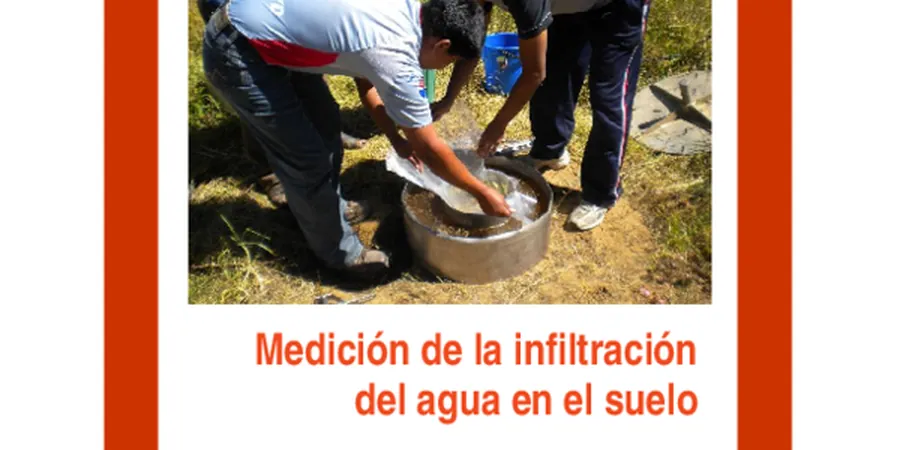
The double-ring infiltrometer setup used in Fremont consists of two concentric steel rings driven 150 mm into the ground, with the outer ring acting as a buffer to force one-dimensional vertical flow through the inner ring. Water is maintained at a constant head of 50 mm using a Mariotte siphon or graduated reservoir, and readings are taken every minute until steady-state flow is reached — typically within 2 to 4 hours for Fremont's silty sands.
Inner ring diameter: 300 mm (standard ASTM D3385).
Outer ring diameter: 600 mm to minimize lateral divergence.
Test depth: 0.3 m to 1.5 m, depending on proposed invert elevation.
For projects requiring undisturbed samples for laboratory validation, the field results can be cross-checked using a flexible-wall permeameter on Shelby tube specimens.
Technical reference image — Fremont
Local considerations
In Fremont, many older subdivisions were built without formal stormwater infiltration testing, relying instead on assumed percolation rates from regional soil surveys. This practice can lead to undersized basins that flood during winter storms or, conversely, to over-designed systems that waste developable land. The risk is compounded by the presence of interbedded clay lenses within the alluvial sequence, which can create perched water tables and reduce effective infiltration capacity. A properly conducted double-ring test at multiple depths captures these vertical permeability contrasts and informs a solid drainage design.
Full setup, constant-head monitoring, and steady-state Ksat determination for stormwater basin and LID design in Fremont.
02
Porchet Test (Percolation Pit)
Single-ring falling-head method for preliminary infiltration assessment in shallow excavations, suitable for small-scale residential projects.
03
Infiltration Suitability Report
Site-specific analysis correlating field test results with soil classification, groundwater depth, and design infiltration rate recommendations per Fremont municipal codes.
Applicable standards
ASTM D3385-18 — Standard Test Method for Infiltration Rate of Soils in Field Using Double-Ring Infiltrometer, IBC 2021 Chapter 18 — Soils and Foundations (percolation requirements), ASCE/EWRI 12-13 — Standard Guidelines for the Design of Urban Stormwater Systems
Frequently asked questions
What is the difference between a Porchet test and a double-ring infiltrometer?
The Porchet method uses a single ring with falling head, while the double-ring infiltrometer uses two concentric rings with constant head. The double-ring setup provides more accurate saturated hydraulic conductivity by minimizing lateral flow divergence. For Fremont projects requiring regulatory approval, the double-ring test (ASTM D3385) is generally preferred.
How deep should infiltration tests be performed in Fremont?
Test depth should match the proposed invert elevation of the infiltration system, typically between 0.3 m and 1.5 m below grade. If the design includes multiple infiltration layers, tests at each distinct soil horizon are recommended. Fremont's alluvial deposits often require testing at 0.6 m and 1.2 m to capture permeability variations.
How much does an infiltration test cost in Fremont?
A standard double-ring infiltrometer test in Fremont typically ranges between US$300 and US$420 per test location. The final cost depends on site accessibility, number of test pits, and whether a full permeability report is required. Multiple test locations may qualify for a reduced per-test rate.
What soil conditions in Fremont affect infiltration rates the most?
The presence of silt and clay lenses within the alluvial fan deposits can significantly reduce vertical permeability. In areas near Mission Creek or the Coyote Hills, shallow clay layers may lower Ksat below 1x10⁻⁶ cm/s, requiring alternative drainage designs. A thorough field testing program at multiple depths is essential to identify these restrictive layers.