Fremont sits on the eastern shore of San Francisco Bay, with an elevation ranging from sea level to over 200 feet in the hills. The city has a population of 220,000 and is underlain by a complex mix of Quaternary alluvium, bay mud, and older terrace deposits. For any medium-to-large foundation, the triaxial test is the direct method to obtain effective stress strength parameters c' and φ'. We run these tests under drained (CD) and consolidated-undrained (CU) conditions following ASTM D4767. Combined with a classification of soils to verify the USCS group, we can then feed the data into bearing capacity and settlement analyses. The results directly inform the allowable bearing pressure and slope stability checks for Fremont's variable ground conditions.
Triaxial test results directly control the bearing capacity and slope stability checks for Fremont's variable bay mud and alluvial ground.
Methodology and scope
A common mistake in Fremont is assuming bay mud behaves like stiff clay just because it looks dry on the surface. That assumption leads to undersized footings and unexpected differential settlement. The triaxial test gives us the undrained shear strength (Su) and the friction angle under in-situ confining stress. For projects near the Coyote Hills or along the shoreline, we also run consolidated-drained tests to capture long-term behavior under sustained loading. We complement this data with a MASW-Vs30 survey to characterize the shear wave velocity profile for seismic site classification. The lab work follows ASTM D2850 for unconsolidated-undrained (UU) tests and ASTM D4767 for CU with pore pressure measurement. Each test takes 5 to 14 days depending on drainage conditions.
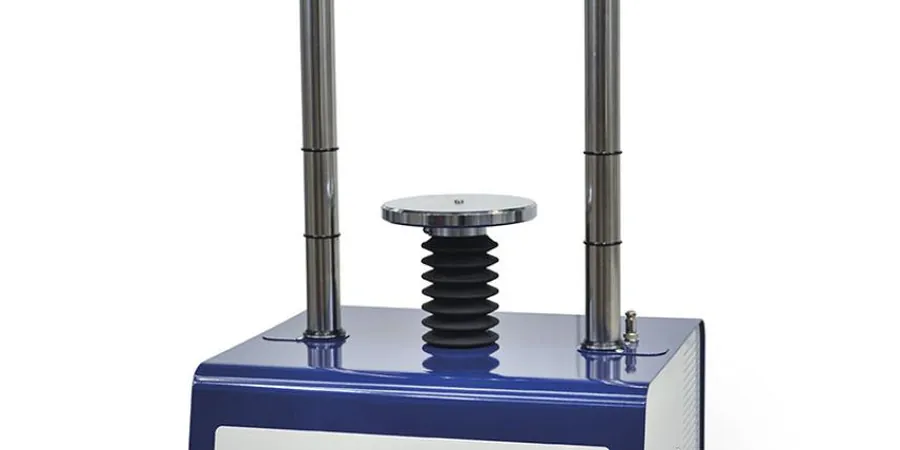
Technical reference image — Fremont
Local considerations
The California Building Code (CBC 2022) and ASCE 7-22 require site-specific shear strength parameters for seismic design categories D, E, and F. Much of Fremont falls into site class D (stiff soil) or E (soft soil) due to deep bay mud deposits. Using generic published values instead of site-specific triaxial data can underestimate liquefaction-induced lateral spreading or overestimate bearing capacity. We follow ASTM D7181 for consolidated-drained testing on granular fills and ASTM D2850 for cohesive layers. The risk of omitting these tests is direct: a foundation that settles 3 inches instead of the allowable 1 inch, which means structural damage in the first winter.
Standard for cohesive soils in Fremont. We back-pressure saturate to B ≥ 0.95, consolidate at three confining stresses, then shear at 0.5–1.0% strain/min while measuring pore pressure. Output: effective stress envelope (c', φ') and undrained strength ratio.
02
Consolidated-Drained (CD) Triaxial Test
Recommended for granular fills and recompacted embankments. Shearing at 0.005–0.05% strain/min ensures full pore pressure dissipation. Provides drained friction angle for long-term stability analyses in Fremont's fill slopes.
Applicable standards
ASTM D2850-15 — Unconsolidated-Undrained Triaxial Compression Test, ASTM D4767-11 — Consolidated-Undrained Triaxial Test with Pore Pressure, ASTM D7181-20 — Consolidated-Drained Triaxial Test for Soils, CBC 2022 Chapter 18 — Soils and Foundations, ASCE 7-22 Chapter 20 — Site Classification for Seismic Design
Frequently asked questions
What is the difference between UU, CU, and CD triaxial tests?
UU (unconsolidated-undrained) measures total undrained strength without drainage — suitable for short-term stability of saturated clays. CU (consolidated-undrained) consolidates the sample under confining stress before shearing without drainage; it gives effective stress parameters while measuring pore pressure. CD (consolidated-drained) allows full drainage during shearing — it provides the drained friction angle for long-term loading, like embankments or retaining walls.
How much does a triaxial test cost in Fremont?
A standard triaxial test (CU with three confining stresses) typically ranges between US$2,000 and US$3,040 per sample, depending on the test type, number of confining stresses, and whether pore pressure measurement is included. CD tests cost more due to longer shearing times. Volume discounts apply for multiple samples from the same site.
How many triaxial tests are needed for a commercial building in Fremont?
For a typical commercial building on bay mud or alluvium, we recommend at least three triaxial tests per soil unit encountered. That means one test per three confining stresses for each distinct layer. If the site has both fill and natural clay, you need six tests minimum. More tests improve the statistical reliability of c' and φ' for bearing capacity and slope stability calculations.
Can triaxial test results be used for seismic site response analysis?
Indirectly, yes. The effective stress parameters from CU or CD tests feed into nonlinear deformation models used in ground response analysis. However, for direct cyclic behavior, you need a cyclic triaxial test (ASTM D5311) or a simple shear test. The static triaxial data provides the baseline strength envelope against which cyclic degradation is measured. In Fremont's seismic zone, we always pair triaxial tests with VS30 profiling for site class verification.